
The Ancient Practice of Contemplating Death
Death is not something our culture readily discusses or even acknowledges as a reality. For those of us raised in Western contexts, mortality typically only comes into focus when we experience loss or are personally confronted with serious illness and tragedy.
For most of us, death remains largely abstract—something that happens to other people somewhere beyond the boundaries of our daily lives. As a society, we have become remarkably skilled at keeping death out of sight and out of mind. The dying are often cared for behind the closed doors of institutions, and conversations about mortality are frequently labeled as “morbid” or “inappropriate.”
And yet, aside from birth, there is no experience more universal than dying. No matter the depth of our denial, death is wholly inescapable. Everyone and everything in the universe will die and change form. Even the most seemingly permanent and immovable fixtures (like our Earth) have their own lifespan and will one day dissolve and return to stardust.
The absurdity is that distancing ourselves from death does not make us less mortal. Life and death are always in motion, inextricably fastened to one another in a great cosmic dance. Denying mortality simply means that when death inevitably enters our lives, we encounter it with little preparation, language, or readiness. If we haven’t reckoned with mortality before it finds us, we can be plunged into fear, grief, and abject panic.
Our relationship with death doesn’t have to be marked by such tragedy, sorrow, denial, and suffering. Death is not inherently “bad” — it is simply a rhythm that we all live within.
Ancient cultures offer us a roadmap for us to befriend death. Throughout human history, people have developed practices for remaining in conscious relationship with death. Before technological advances enabled the distraction and concealment of dying, it was witnessed in homes and communities, reflected in spiritual traditions, and observed with immense reverence in the natural world.
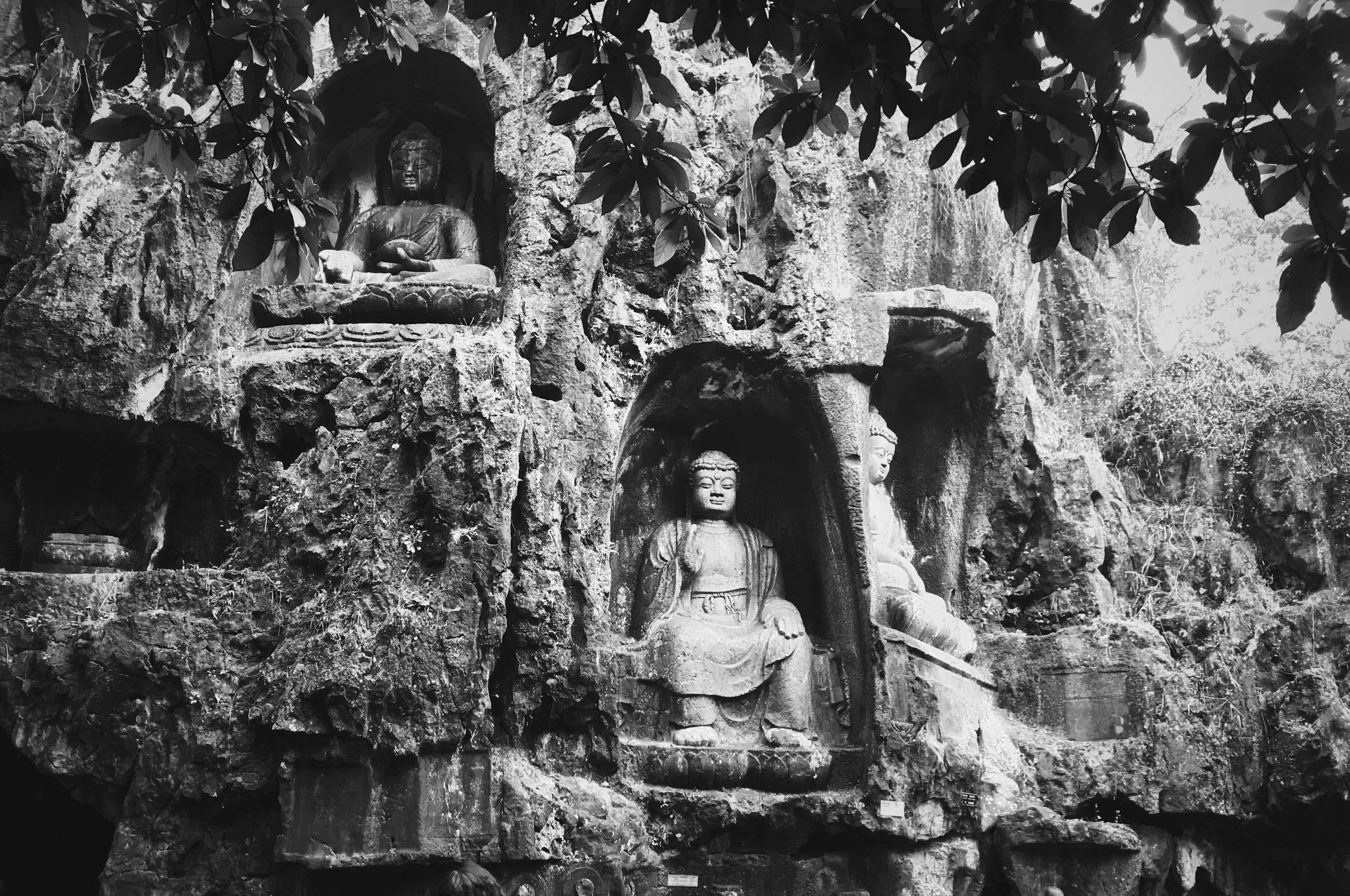
For pre-modern human beings, deliberate remembrance of death became a necessary practice for making sense of suffering, accepting the finitude of life, and exploring the laws of existence. The Buddha taught maranasati, or mindfulness of death, a meditative approach in which practitioners contemplate both the certainty of death and the uncertainty of its timing. Medieval Christian monastics practiced memento mori, keeping death close as a reminder of the brevity of life and the importance of living gently. Stoic philosophers Marcus Aurelius, Seneca, and Epictetus similarly reflected on death as a way of clarifying the mind, loosening attachment, and returning to truth.
When we stop regarding death as a crisis and begin to embrace it as a natural stage within cyclical time, we are offered the opportunity to meet our lives with greater humility, curiosity, and awe. Just like an old friend, we can begin to acquaint ourselves with its idiosyncrasies, become familiar with its presence, and listen to what it has to teach us.
Hypnosis can soften fear of death
Given the intensity of our cultural conditioning around death, simply deciding to think differently about mortality is rarely enough. Fear of death often resides beneath our intellectual beliefs, taking shape through the body, the psyche, and deeply rooted associations that may be difficult to access through conscious reflection alone.
Depth Hypnosis offers a way of exploring these subtle subconscious layers. Drawing from hypnotherapy, Buddhist psychology, shamanic tradition, and transpersonal psychology, Depth Hypnosis uses altered states of consciousness to bring us into contact with beliefs, fears, and patterns that may sit just beneath the surface of ordinary awareness.
If you are interested in this process, I offer Depth Hypnosis sessions for death anxiety, existential fear, grief, and other experiences that bring us into contact with the gift, transformation, and the uncertainty of being alive.